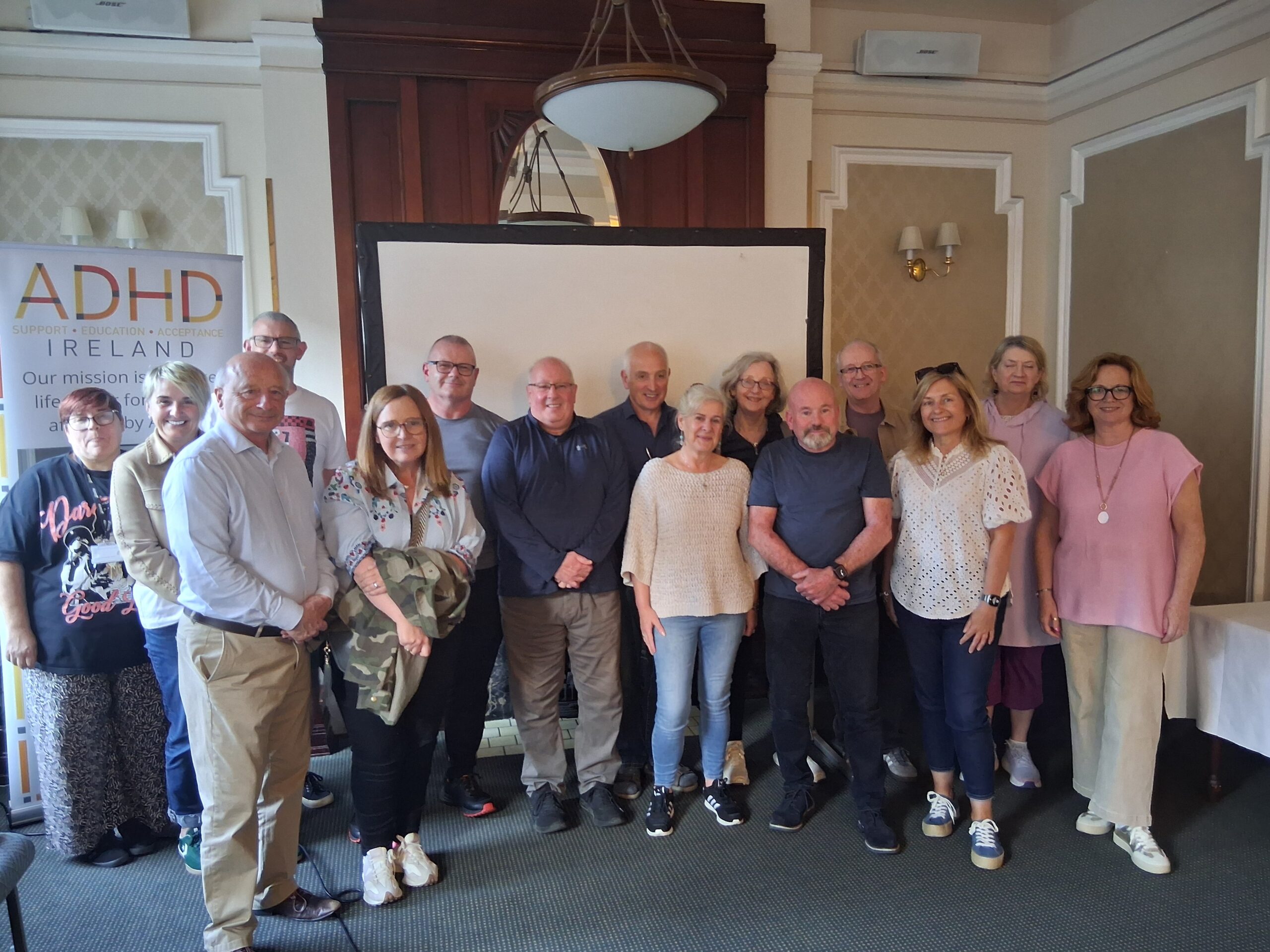
ADHD Ireland presented a workshop in Wynn Hotel Dublin, Thursday 22nd May to a packed-out room of Le Chéile volunteer mentors, staff and youth work partners.
Ken Kilbride, CEO of ADHD Ireland spoke about ADHD Ireland’s objective to support young people and adults with ADHD, provide psychoeducational and psychosocial support and offered Le Chéile volunteer mentors and staff a unique and informative insight into the condition.
Marie Vanasova, Mentoring Team Leader for Le Chéile Dublin South was thrilled to host the event for a cohort of both long-term volunteer mentors as well as new volunteer recruits waiting to be matched.
“We offer ongoing extensive training to our volunteer mentors to ensure they’re as well-informed and well-resourced as they can be for such a high-commitment volunteer role. It was amazing to see such a high turn-out of our network, people really wanted to find out more about ADHD.
“I’ve found throughout the years that our volunteers love to learn. Not only to help them support the young people and families that we work with but also for the sheer appreciation of gaining knowledge and expertise, they have an appetite to be as educated as they possibly can be about the potential issues facing our young people and families.
“For me, this workshop couldn’t have come at a better time. We’ve just completed our 2023/2024 annual reporting, and the findings tell us that a significant cohort of the young people referred to us have or may have potentially have an ADHD diagnosis.”
ADHD in the Irish Criminal Justice System: An Overlooked Issue
Attention Deficit Hyperactivity Disorder (ADHD) is significantly overrepresented in the Irish criminal justice system. While ADHD affects an estimated 5% of the general population, recent figures suggest the rate may be as high as 25% among people in Irish prisons according to a 2024 report by the Irish Penal Reform Trust (IPRT), in collaboration with the Irish Prison Service.
Research from Professor Michael Fitzgerald at Trinity College Dublin also identified clear links between undiagnosed ADHD and increased risks of substance abuse, impulsive behaviour, and reoffending—factors that can perpetuate involvement in the justice system.
Youth Justice and ADHD
Among younger people in detention, the situation is even more stark. A University College Dublin study found that over two-thirds of detained youths met criteria for externalising disorders such as ADHD, and many also struggled with addiction and suicidal thoughts. These findings reflect the deep intersections between mental health, trauma, and offending behaviours.
Kilbride had this to say the event: “It’s my personal opinion that anyone who enters the justice system should be assessed for ADHD. As an organisation, we’re currently exploring the possibility of policy change recommendations advocating ADHD assessments for anyone who comes into contact with justice services.”
However, Kilbride took care to outline to attendees the many positive attributes people with ADHD have, the many successful and prominent people who live with the condition and the myriad ways people can manage ADHD in a way that works for them.
“We’re speaking about the apparent prevalence of both diagnosed and what I would most likely deem untreated ADHD that seems to appear in a justice context, as well as new research indicating one-in-five people using drugs and alcohol have symptoms of ADHD, but I don’t want to paint a bleak or unfair picture of the condition.
“We advocate for support, education and acceptance. Early intervention and widespread awareness will offer our society tools wherein every person is empowered and supported to reach their full potential.”
Anne Conroy, CEO of Le Chéile Mentoring expressed thanks to ADHD Ireland for presenting the workshop.
“We really appreciate the time you took to come and educate and inform us about ADHD. This is a subject we need to stay up-to-date on to enable us to support a significant cohort of the people who are referred to us. ADHD Ireland’s mission to advocate for support, education and acceptance aligns very closely with our own mission to work along-side children, young people and their families, to enable them to reach their potential.”