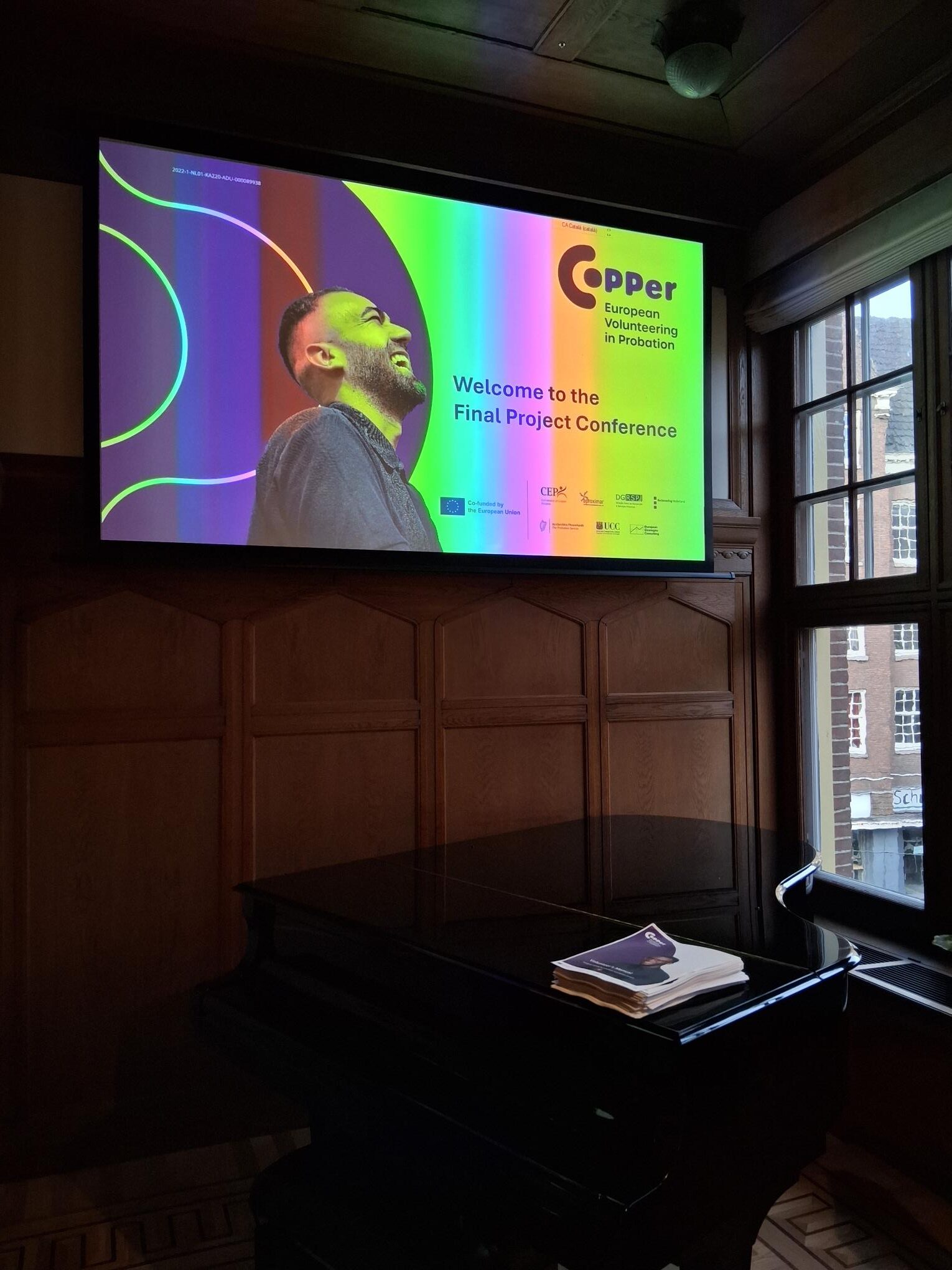
As the CoPPer (European Volunteering in Probation) Project draws to a close, partners across Europe are reflecting on the significant progress made in strengthening the role of volunteers within probation services. Over the past three years, this ambitious initiative has united organisations, probation services, and academic institutions to shape a shared vision for how community engagement can best support rehabilitation and reintegration.
Le Chéile Mentoring has been proud to play an active role in this journey. Most recently, at the final CoPPer transnational conference in The Hague, which brought together nearly 70 participants from across Europe, including representatives from the Netherlands, Portugal, Romania, Estonia, Germany, Ireland, Turkey, and even partners from Japan.
Stronger Communities and European Collaboration
The CoPPer Project is more than a study of the role of volunteerism in rehabilitation pathways; it has been about building bridges between people, services, and systems. Its central goal has been to create a competency framework for volunteer engagement within probation, supported by in-depth research and cross-border collaboration.
Throughout the project, partners have gathered and shared best practices, resulting in a rich set of tools and resources, including training materials, handbooks, and webinars, designed to strengthen volunteer support within Probation-Funded Services. These resources, shaped by the voices and experiences of existing volunteers, will continue to benefit organisations like Le Chéile Mentoring and many others across Ireland and Europe. One such knowledge-sharing visit to Le Chéile was from Aproximar, a counterpart justice organisation in Portugal. Assistant Sector Coordinator for the Justice System, João Melo, said this:
“Our job shadowing in Dublin with Le Chéile Mentoring was supposed to be a learning visit — instead, it turned into a masterclass in mentoring, community engagement, and effective probation work. The way the team welcomed us and shared their experience made the visit especially meaningful, and we brought back valuable insights to strengthen our work at Aproximar”
At the final conference, Le Chéile’s CEO, Laura Walsh, joined representatives from the Probation Service, youth justice organisations, and volunteer networks to discuss how these learnings will be embedded into ongoing work. Walsh reflected on the importance of sustaining the momentum and continuing to champion the role of volunteers as vital partners in the rehabilitation process.
Sharing Learning at Home
In addition to the European gatherings, CoPPer partners have been active in sharing knowledge locally. Earlier in October, Dr Katharina Swirak (University College Cork) and Tony Swaine (Irish Probation Service) met with Joseph Keaney of the Probation Service’s Community Based Organisations Unit, Laura Walsh, and Alan Quinn of Le Chéile Mentoring to plan an input on volunteerism in probation for the Irish Probation Service’s Community Based Organisation (CBO) Summit.
The Summit, held on 23 October in Dublin, brought together a wide range of Community-Based Organisations working in criminal justice to network, collaborate, and share learnings. The CoPPer Project’s contribution showcased its findings on the impact and benefits of volunteerism in probation, with additional insights from Michael Daly, Circles of Support and Accountability (CoSA) Co-ordinator with PACE.
Looking Ahead
While the CoPPer Project formally concludes this year, it will continue to influence how volunteerism in probation is understood and supported across Europe. The partnerships, frameworks, and tools developed through CoPPer will now move into implementation. Le Chéile Mentoring and the Irish Probation Service are looking to build stronger, more inclusive, and more effective volunteering structures and frameworks based on the knowledge shared.
The conclusion of the CoPPer summits is far from the end. Along with other European stakeholders, Le Chéile Mentoring now has the chance to apply years of collaboration and learning to real-world practice, ensuring that volunteers remain at the heart of probation and community reintegration efforts for years to come.